


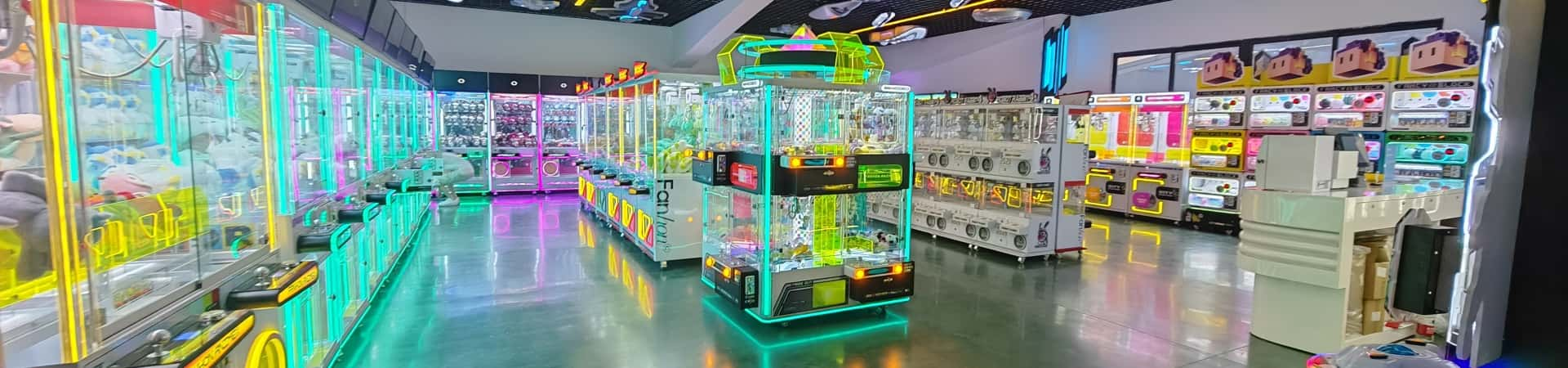
Starting or expanding an arcade business requires more than choosing a few attractive machines.
The equipment investment should be considered together with the venue, available space, target customers, equipment mix, budget and future operating needs.
A clear plan can help buyers avoid purchasing equipment that does not fit the venue or leaving important costs and requirements out of the project.
1. Start With the Venue
Before choosing equipment, understand the space where the machines will operate.
Important factors include:
(1)Total floor area
(2)Usable gaming area
(3)Ceiling height
(4)Entrance and exit locations
(5)Customer flow
(6)Electrical access
(7)Storage and maintenance space
The available space determines not only how many machines can be installed, but also which machine sizes and configurations are practical.
Arcade planning should also consider customer movement and sufficient circulation space between machines. Industry guidance from IAAPA emphasizes layout, game placement and the overall use of available space as important parts of arcade planning.
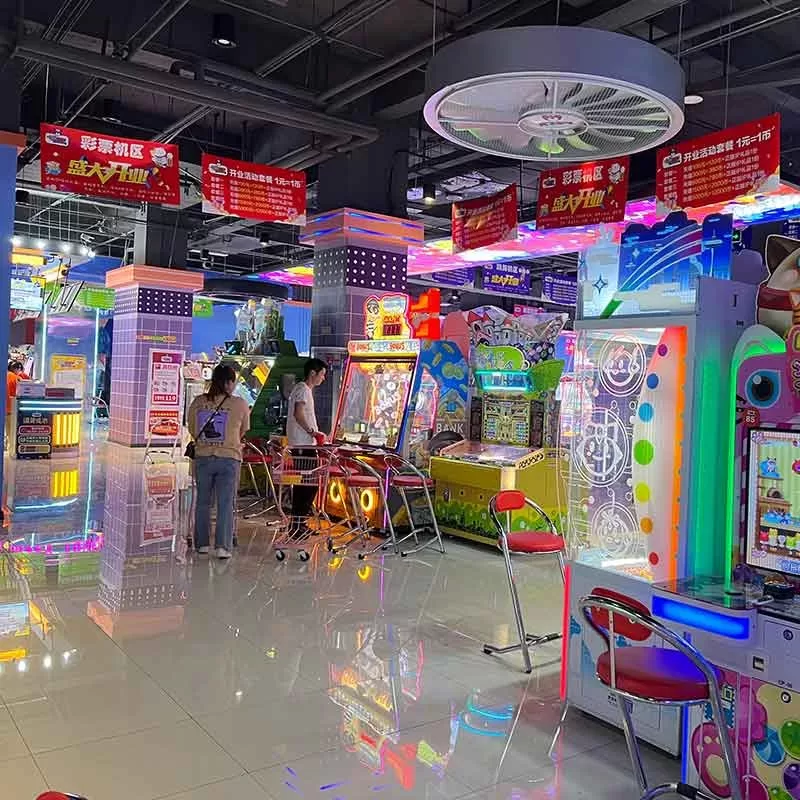
2. Define Your Target Customers
Different customers may prefer different types of arcade equipment.
For example:
(1)Children and families may respond well to claw machines, capsule machines and simple interactive games.
(2)Teenagers and young adults may prefer competitive or skill-basedarcade games.
(3)Mixed-age venues may require a broader equipment combination.
(4)Prize-focused venues may place greater emphasis on claw machines and redemption equipment.
Understanding your target customers helps determine not only what equipment to purchase, but also how the machines should be arranged.
3. Set the Equipment Budget Before Shopping
It is easier to compare equipment when you establish a realistic investment range first.
Your budget should not be limited to the machine purchase price. Depending on the project, you may also need to consider:
(1)Equipment
(2)Shipping
(3)Installation
(4)Venue preparation
(5)Payment systems
(6)Prizes
(7)Signage and branding
(8)Spare parts
(9)Maintenance
(10)Future equipment replacement
For international projects, shipping and import-related costs should also be considered before confirming the final equipment quantity.
A clear budget helps you determine whether to start with a smaller equipment mix or develop a larger project from the beginning.
4. Build an Equipment Mix
An arcade does not necessarily need to rely on one type of machine.
Different equipment categories can serve different purposes. A commercial arcade may combine:
Claw Machines
Prize-based gameplay with strong visual appeal.
Redemption Games
Interactive games connected with ticket or prize systems.
Coin Pusher Machines
Mechanical gameplay based around coins and prizes.
Capsule Machines
Compact equipment suitable for capsule toys and small prizes.
Video & Skill Games
Interactive gameplay for customers looking for competitive or skill-based experiences.
Industry guidance also highlights the use of different game categories together rather than building a venue around only one type of attraction.
The exact equipment mix should depend on the venue and customer profile rather than following a fixed formula.
5. Plan the Layout Before Ordering
Equipment quantity and layout are closely connected.
Instead of deciding how many machines to buy first, create a basic layout showing:
(1)Machine positions
(2)Customer walkways
(3)Entrance and exit
(4)Prize or redemption area
(5)Payment points
(6)Maintenance access
(7)Storage areas
A 2D layout can help determine whether the selected equipment actually fits the available space.
For larger or more customized projects, a 3D design can provide a clearer view of the final environment before production and installation.
This is particularly useful when purchasing multiple machine categories at the same time.
6. Consider the Operating Side
Buying equipment is only the beginning.
Before placing an order, consider how the machines will be operated and maintained.
Questions to ask include:
(1)How will machines be monitored?
(2)How often will prizes need to be replenished?
(3)Who will handle maintenance?
(4)Are spare parts available?
(5)How easy are the machines to access?
(6)What payment system will be used?
(7)How will equipment performance be reviewed?
Arcade operations require ongoing attention. IAAPA notes that maintenance and regular reinvestment in equipment are important considerations for keeping an arcade experience current.
7. Leave Room for Future Expansion
A good initial layout should not make future expansion difficult.
If possible, consider leaving space for:
(1)Additional claw machines
(2)New arcade games
(3)Larger prize displays
(4)Additional payment equipment
(5)New themed areas
(6)Expanded redemption sections
This is especially useful for businesses planning to test a new venue first and expand the equipment mix later.
Planning for expansion does not mean buying more equipment immediately. It means making the current layout flexible enough to accommodate future changes.
8. Work With the Manufacturer Early
For larger arcade projects, it can be useful to involve the equipment supplier before the final order is confirmed.
A manufacturer can help review:
(1)Equipment dimensions
(2)Machine configurations
(3)Product combinations
(4)Customization requirements
(5)Payment options
(6)Layout requirements
(7)Packaging and shipping
(8)Production arrangements
This can help connect the venue plan, equipment list and production process before manufacturing begins.
For customized projects, this is particularly important because changes made before production are generally easier to manage than changes after the equipment has already been manufactured.
9. Review the Project as a Whole
Before confirming an arcade equipment investment, review the complete project rather than focusing only on individual machine prices.
A practical checklist includes:
| Area | What to Review |
| Venue | Size, location and customer flow |
| Customers | Age groups and entertainment preferences |
| Budget | Equipment and additional project costs |
| Equipment | Categories, quantities and configurations |
| Layout | Machine placement and circulation |
| Payment | Suitable payment configuration |
| Prizes | Prize types, capacity and replenishment |
| Maintenance | Service access and spare parts |
| Shipping | Packaging, transportation and delivery |
| Expansion | Space for future equipment |
This gives you a clearer picture of the project before committing to the final equipment list.
10. Start With a Practical Plan
There is no universal equipment list that works for every arcade business.
A small retail entertainment area may require a very different solution from a large family entertainment center.
The right starting point is to understand:
Where will the machines be installed?
Who will use them?
How much space is available?
What equipment categories fit the venue?
What is the available investment budget?
How will the equipment be operated and maintained?
Once these questions are clear, equipment selection becomes much more straightforward.
Final Thoughts
Planning an arcade equipment investment is about more than comparing machine prices.
A practical plan should connect venue, customers, budget, equipment mix, layout, operation and future expansion.
For businesses purchasing commercial arcade equipment, working with a manufacturer early in the planning process can also help turn the initial idea into a more practical equipment and layout plan.