


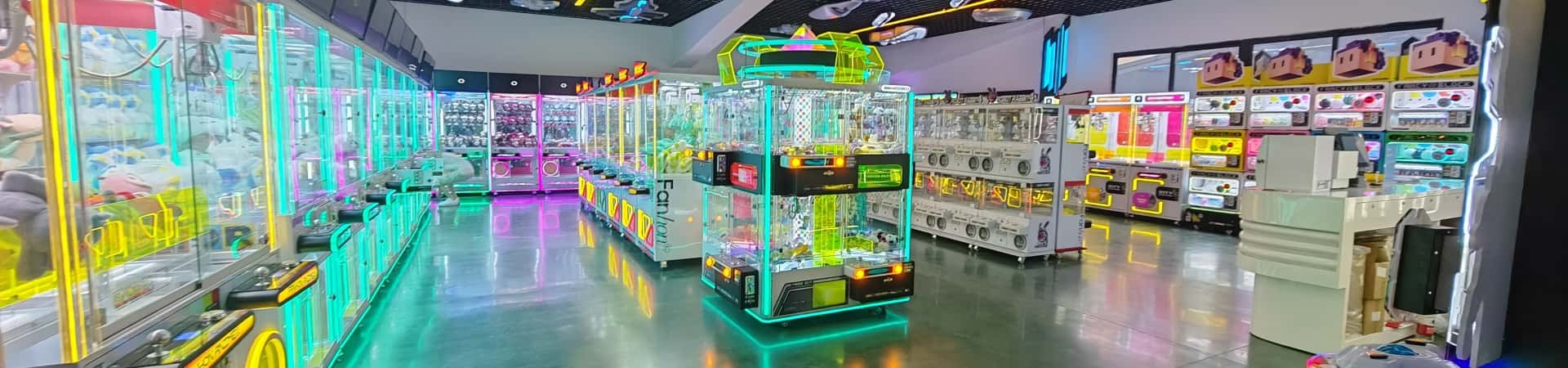
What Makes a Good Commercial Claw Machine?
A commercial claw machine may look simple from the outside, but many components work together to create a reliable playing experience.
For operators, distributors and entertainment businesses, appearance and price are only part of the decision. Cabinet construction, claw performance, control systems, payment configuration, maintenance access and customization should also be considered.
So, what should buyers look for in a commercial claw machine?
1. Durable Cabinet Construction
The cabinet is the main structure of the machine and protects many of its internal components.
Commercial machines may operate for long periods and experience frequent player interaction, so buyers should pay attention to:
(1)Cabinet structure and materials
(2)Glass or acrylic panels
(3)Door and lock design
(4)Internal component protection
(5)Overall finishing quality
(6)Ease of maintenance
A well-designed cabinet should provide sufficient structural stability while also allowing operators to access key components when maintenance is required.
2. Stable Claw Performance
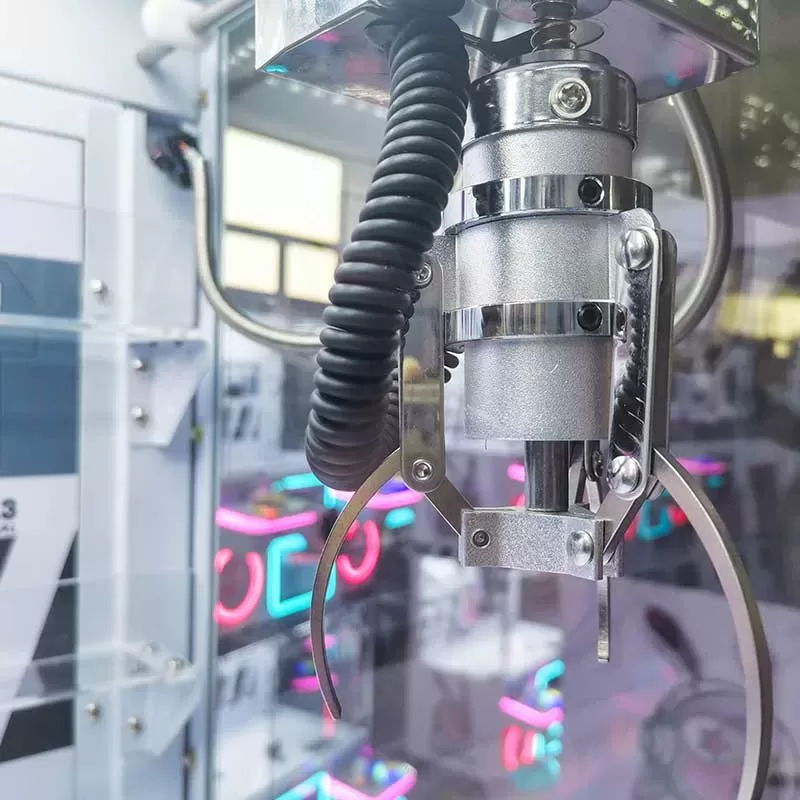
The claw is one of the most important parts of the machine because it directly affects gameplay.
A commercial claw machine should provide smooth and stable movement across the operating area. Buyers should check:
(1)Claw movement
(2)Motor operation
(3)Lifting mechanism
(4)Claw size
(5)Claw strength settings
(6)Ease of adjustment and maintenance
The claw should also be matched to the type and size of prizes used in the machine. A machine designed for small prizes may require a different claw configuration from one designed for larger plush toys.
3. Reliable Control System
The control system connects the player's input with the machine's mechanical functions.
A good commercial claw machine should provide responsive controls and stable operation. Buyers can check:
(1)Joystick response
(2)Button quality
(3)Control board stability
(4)Movement accuracy
(5)Wiring quality
(6)Accessibility of internal components
These details may seem small, but they can have a direct effect on the player's experience and the operator's maintenance work.
4. Suitable Prize Capacity and Visibility
The prize area is another important part of a claw machine.
The machine should provide enough space for the intended prize type while maintaining good visibility. An overcrowded prize area can affect how the claw moves, while poor prize positioning can make the machine less attractive to players.
When selecting a machine, consider:
(1)Prize size
(2)Prize quantity
(3)Prize loading method
(4)Visibility from different angles
(5)Prize chute design
(6)Ease of restocking
The machine and prizes should be considered together rather than separately.
5. Practical Payment Configuration
Different markets may use different payment methods.
Depending on the machine model and target market, buyers may need to consider coin, token, bill, card or other payment configurations.
Before production, international buyers should confirm:
(1)Local payment requirements
(2)Operating voltage
(3)Electrical standards
(4)Payment hardware
(5)Interface requirements
The important point is not simply having more payment options, but choosing a configuration that fits the actual market and venue.
6. Easy Maintenance Matters
Even a well-built commercial claw machine needs regular maintenance.
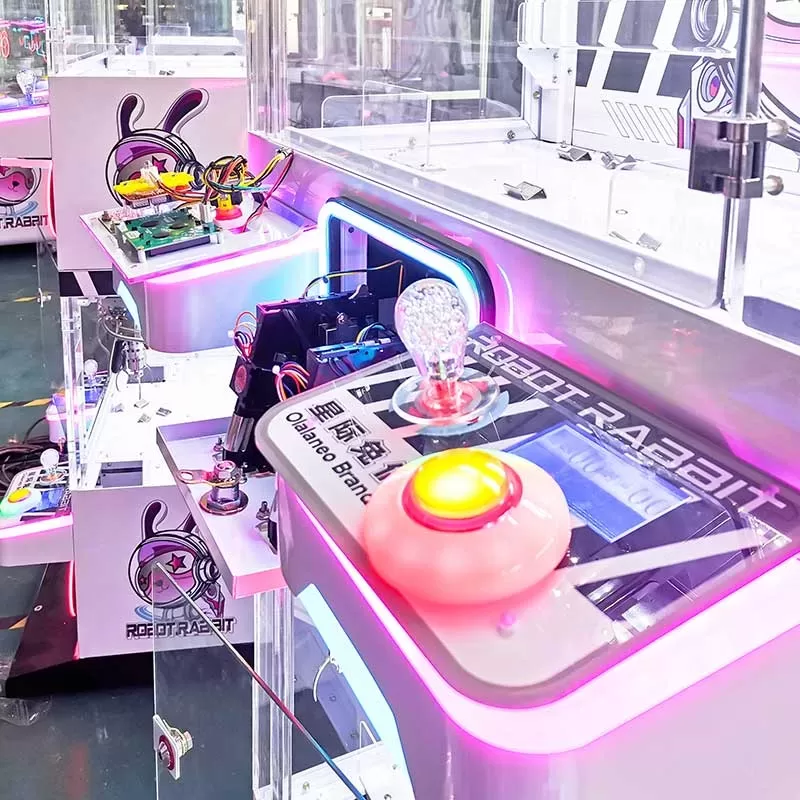
Operators should be able to access important components without unnecessarily complicated procedures.
Look for practical features such as:
(1)Accessible internal components
(2)Easy prize replenishment
(3)Replaceable wear parts
(4)Clear control settings
(5)Accessible wiring and electrical components
(6)Straightforward troubleshooting
Maintenance requirements are worth discussing with the manufacturer before placing an order, especially when purchasing machines for multiple locations.
7. Appearance Should Support the Business
Functionality is important, but appearance also matters.
For many venues, the claw machine is part of the overall visual environment. Cabinet shape, colors, lighting, graphics and branding can all influence how the equipment fits into the venue.
Consider whether the machine's design matches:
(1)Your venue style
(2)Target customers
(3)Brand identity
(4)Prize category
(5)Existing arcade equipment
For businesses with their own brands, OEM and ODM customization can provide additional flexibility in cabinet appearance, colors, logos, lighting and selected configurations.
8. Choose the Right Size and Configuration
There is no universal machine size for every venue.
A compact claw machine may be suitable for a retail space or smaller entertainment area, while larger multi-player configurations may be more appropriate for an arcade or family entertainment center.
Before ordering, consider:
(1)Available floor space
(2)Customer walking area
(3)Machine dimensions
(4)Prize loading space
(5)Maintenance access
(6)Transportation and installation
This also connects directly with your overall claw machine store layout. Equipment selection and space planning should be considered together rather than separately.
9. Don't Forget the Manufacturer
The quality of a commercial claw machine depends not only on the finished cabinet but also on the manufacturer's ability to control production and support customers.
Before ordering, ask the manufacturer about:
(1)Product specifications
(2)Production process
(3)Quality control
(4)OEM/ODM capabilities
(5)Spare parts
(6)Technical support
(7)Packaging and shipping
(8)Sample testing
For larger projects, requesting a sample or conducting a factory inspection can also help buyers evaluate the actual equipment before placing a bulk order.
10. A Good Commercial Claw Machine Is a Complete System
A commercial claw machine should not be judged by one feature alone.
A practical evaluation should consider the entire machine:
Cabinet → Claw Mechanism → Control System → Prize Area → Payment → Maintenance → Appearance → Manufacturer Support
A machine with attractive lighting but poor serviceability may create problems later. Likewise, a machine with strong construction but an unsuitable configuration may not fit the intended venue.
The goal is to find the right balance between appearance, functionality, reliability, maintenance and business requirements.
Final Thoughts
When choosing a commercial claw machine, look beyond the exterior and the purchase price.
Pay attention to the cabinet, claw mechanism, control system, prize area, payment configuration, maintenance access and customization options. At the same time, evaluate the manufacturer's production capabilities and support services.
A well-selected machine should not only look good in the venue but also be practical for everyday commercial operation.