


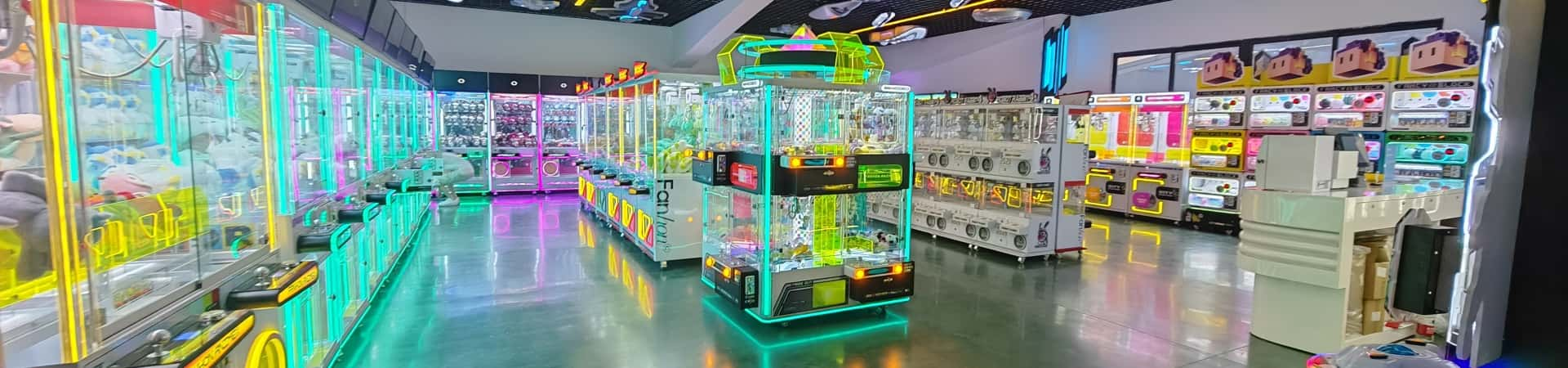
For a commercial claw machine, the first thing a player notices is usually the machine itself.
The cabinet design, colors, lighting and visible prizes create the first impression before a player even starts the game. However, visual attraction is only the beginning. Once a player stops, the prize display, control area, gameplay experience and machine performance can influence whether they decide to play.
This means good claw machine design should connect appearance with the complete player experience.
1. The Machine Appearance Creates the First Impression
In a busy arcade or entertainment venue, many machines compete for attention.
A claw machine with a distinctive cabinet shape, attractive colors, clear graphics or well-designed lighting can be easier to notice from a distance.
The design should also match the venue.
For example, a colorful machine may fit a family entertainment environment, while a more modern cabinet design may be suitable for a shopping mall or branded entertainment space.
The goal is not simply to make the machine look complicated. A good design should make the machine easy to notice and easy to understand.
2. Prize Visibility Turns Attention Into Interest
After the cabinet catches a player's attention, the prizes become one of the most important visual elements.
Players want to know what they can win before they decide to play. A clear prize display allows them to quickly see the available prizes, their colors, sizes and overall appeal.
Good prize presentation can therefore work together with the machine's exterior design.
Consider:
Clear visibility through the cabinet
Attractive prize arrangement
Suitable prize size
Good internal lighting
Easy-to-see target prizes
A clean and organized prize area
The machine becomes more than an arcade cabinet. It also becomes a visible display of the prizes available to players.
3. Lighting Helps the Machine Stand Out
Lighting is another important part of commercial claw machine design.
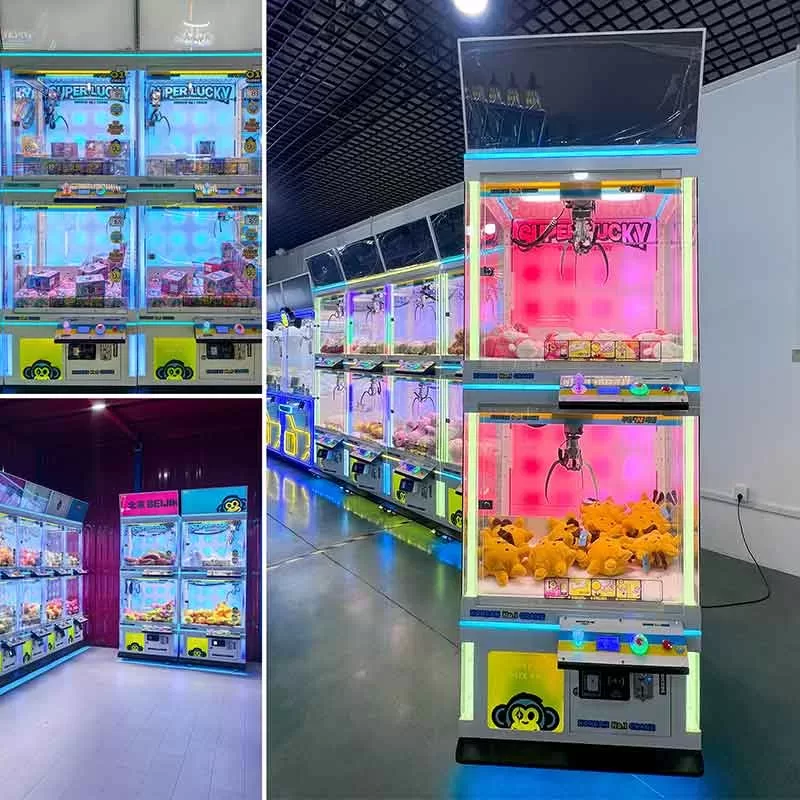
In a busy arcade environment, lighting can help define the cabinet outline, highlight the prize area and make the machine easier to notice.
Depending on the design, lighting can be used around:
(1)The cabinet edges
(2)Top signage
(3)Prize area
(4)Control panel
(5)Front display
However, more lighting does not always mean better design.
Excessive brightness, glare or poor contrast can make prizes and instructions harder to see. Lighting should support the cabinet design rather than distract from it.
A practical lighting design should consider both visual attraction and usability.
4. The Control Area Should Be Easy to Understand
Once a player is interested in the machine, the next step is interaction.
The joystick, buttons, payment area and instruction information should be easy to find and understand.
A complicated control panel can create unnecessary friction, especially for first-time players.
Good commercial claw machine design should consider:
(1)Control position
(2)Button visibility
(3)Joystick access
(4)Instruction placement
(5)Payment position
(6)Prize collection area
The machine should communicate the basic gameplay flow naturally:
See the prize → Understand the game → Start playing → Control the claw → Collect the prize
The simpler this process feels, the easier it is for new players to interact with the machine.
5. Cabinet Design Should Match the Target Audience
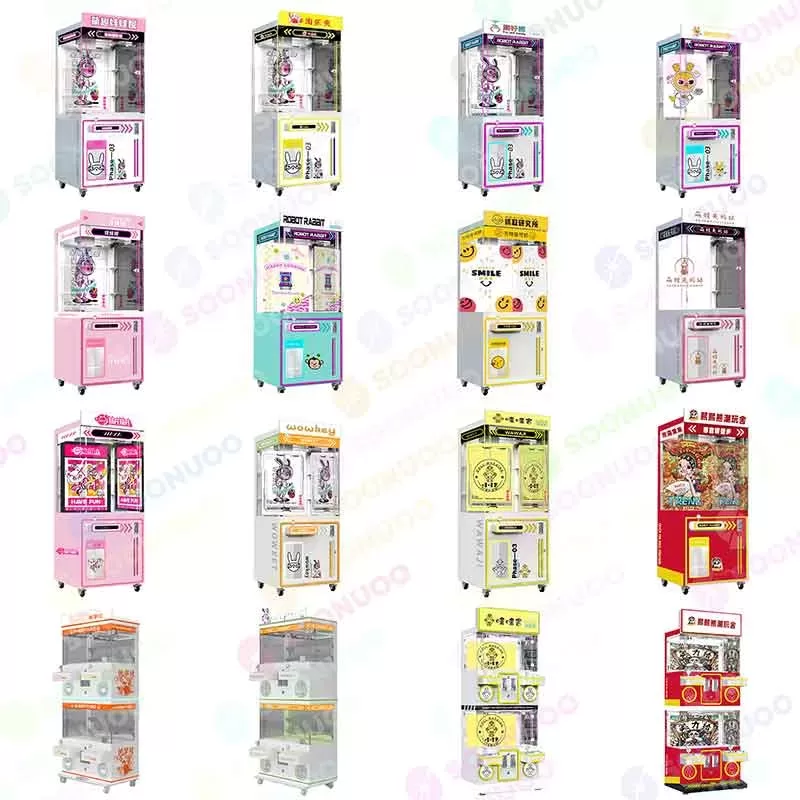
There is no single claw machine appearance that works for every venue.
Different businesses may target different customers, so the machine design should match the intended audience.
For example:
Family Entertainment Centers
Bright colors, playful graphics and visible prizes can create a friendly atmosphere.
Shopping Malls
A modern cabinet with strong visual branding can fit better into a more polished retail environment.
Dedicated Claw Machine Stores
Multiple coordinated machine designs can help create a consistent store identity.
Branded Entertainment Projects
Custom colors, graphics and cabinet elements can help connect the machines with the overall brand.
This is where custom claw machine design can be useful. Instead of simply changing the logo, businesses can consider the machine's overall visual identity.
6. Machine Design Should Work With the Venue Layout
A good machine can lose some of its visual impact if it is placed poorly.
The machine should be considered together with the surrounding space.
(1)Important factors include:
(2)Customer walking paths
(3)Machine spacing
(4)Visibility from the entrance
(5)Viewing angles
(6)Player standing area
(7)Maintenance access
Grouping claw machines together can create a stronger visual zone than placing individual machines randomly around a venue. Recent arcade planning guidance also emphasizes visibility, customer flow and machine grouping when designing claw machine areas.
This is why machine design and claw machine store layout should be considered together rather than as two completely separate decisions.
7. Visual Attraction Is Only the First Step
An attractive machine can make a player stop, but appearance alone does not determine the complete playing experience.
After the first visual impression, players also notice:
(1)Claw movement
(2)Joystick response
(3)Button operation
(4)Prize accessibility
(5)Machine stability
(6)Payment process
(7)Overall gameplay experience
This creates an important distinction:
Appearance attracts attention.
Prizes create interest.
Gameplay creates participation.
Machine performance and operation affect the overall experience.
For operators, this means choosing a claw machine should involve more than cabinet appearance.
8. Design for Both Players and Operators
Commercial claw machine design also needs to consider the operator's side.
A visually attractive machine still needs to be practical for daily operation.
Operators should consider:
(1)Prize loading access
(2)Machine maintenance
(3)Electrical components
(4)Payment system access
(5)Cleaning
(6)Cabinet durability
(7)Technical support
A well-designed commercial machine should balance player attraction and operator usability.
Final Thoughts
Claw machine design has an important role in attracting players, but its role goes beyond making the cabinet look attractive.
The best approach is to consider the complete experience:
Cabinet → Lighting → Prize Display → Controls → Gameplay → Operation
The cabinet creates the first impression. Lighting helps the machine stand out. Prize visibility gives players a reason to look closer, while simple controls and reliable gameplay help turn attention into actual interaction.
For businesses selecting or customizing commercial claw machines, the key is to find a design that fits the venue, target customers, prizes and operating requirements rather than choosing a machine based on appearance alone.